.png)
Customs clearance of various vitamins in Iran (HS Code + documents and permits)
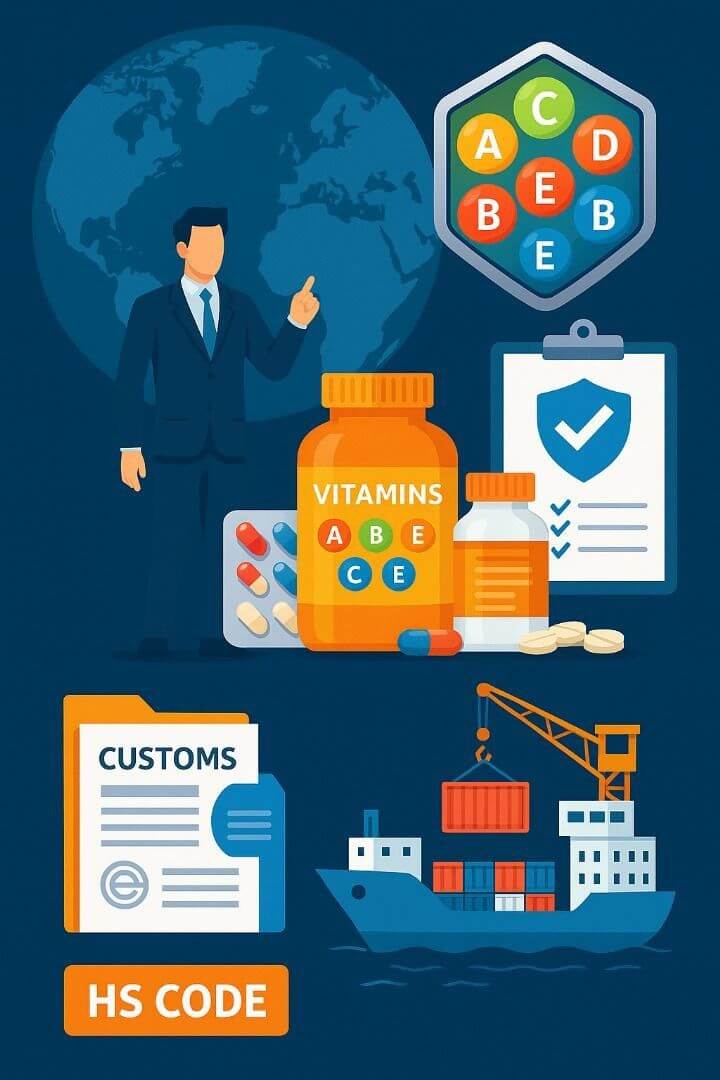
For estimating the time and cost of customs clearance of various vitamins, contact the experts at Saba Tarkhis.
Instant free consultation1) Applications and importance of vitamins
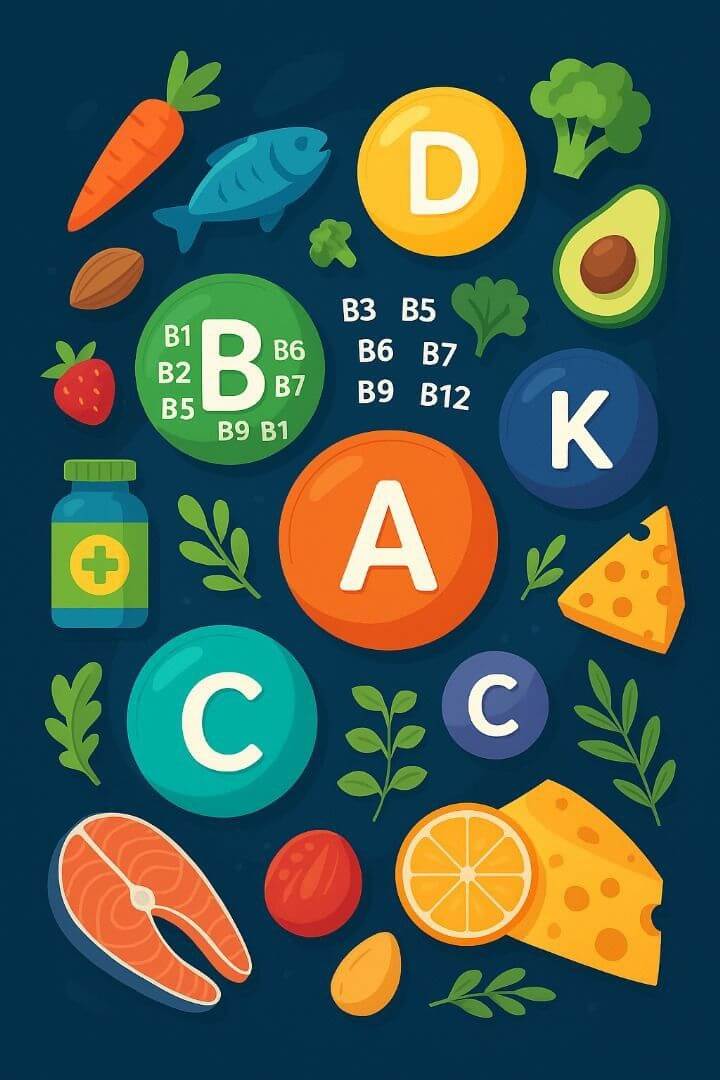
Water-soluble vitamins: This category includes vitamins such as vitamin C and B-group vitamins. These vitamins are not stored in the body and must be regularly supplied through diet or supplements.
Fat-soluble vitamins: Vitamins A, D, E, and K fall into this category. These vitamins are stored in the body's fatty tissues and are utilized over time.
The use of vitamins in various industries is highly diverse and vital:
Pharmaceutical industry: Vitamins are used as raw materials for producing medicines and dietary supplements. Many medicines for maintaining general health and improving diseases require vitamins.
Food industry: In the food industry, vitamins are used to fortify food products. This action helps improve the nutritional value of products and is effective in preventing nutritional deficiencies.
Animal husbandry and agriculture: Vitamins are used in the livestock industry to improve the health of livestock and poultry and increase production efficiency. These compounds also help increase the quality of livestock and agricultural products.
2) Key points in clearing vitamins from customs
Obtaining an import permit from the Ministry of Health: For importing vitamins into Iran, receiving a permit from the Ministry of Health and the Food and Drug Administration is mandatory. This permit indicates that the imported vitamins comply with national and international standards and ensures that these products are safe for human use or in the food and pharmaceutical industries. During the permit process, quality and health evaluations are performed to ensure the vitamins’ safety.
Providing a Certificate of Analysis (COA): Imported vitamins must be accompanied by a Certificate of Analysis. This certificate, issued by the manufacturer, indicates the precise chemical composition, purity, and amount of active substances in the vitamins. Having this certificate is one of the important documents in the clearance process, and without it, clearing goods from customs will face problems.
Order registration and obtaining the customs tariff code (HS Code): Importers must first register their order in the Comprehensive Trade System and then, based on the type of vitamins, obtain the appropriate HS Code. Each type of vitamin has a specific tariff code that determines the import tariff. For example, the tariff code for vitamin C, B-group vitamins, vitamins A and D, and vitamin E are each different.
Compliance with health and quality standards: All imported vitamins must comply with domestic and international health and quality standards. The National Standards Organization of Iran and the Ministry of Health may perform tests related to product quality and safety before clearance to ensure compliance with national standards. Adhering to these standards prevents potential problems in clearance and increases the speed of customs clearance.
Proper labeling and packaging: All imported vitamins must be properly and standardly packaged and labeled. The information on the packaging should include the product name, ingredients, manufacturing and expiration dates, and the country of origin, and must be complete and in Persian or English. This information is necessary to ensure product quality and compliance with domestic laws.
3) Special conditions for importing and exporting vitamins
Importing vitamins to Iran: Iran mainly imports its vitamins from developed countries with strong infrastructure in the production of pharmaceutical and food products. Countries such as China, India, Germany, the United States, and France are among the main exporters of vitamins to Iran. By producing high-quality vitamins and adhering to international standards, these countries supply a large share of the global market’s needs, including Iran’s.
Exporting vitamins from Iran: Iran, having production capabilities in some types of dietary and vitamin supplements, has managed to gain a share of exports to neighboring countries. Iraq, Afghanistan, and some Central Asian countries are among the main markets for vitamins produced in Iran. Although the export volume of vitamins from Iran is less than its imports, this market is expanding due to the development of the dietary supplements industry in the country.
4) Iran’s import/export volume and the global turnover of vitamins
5) The largest exporters and importers of vitamins
China: The largest producer and exporter of various vitamins in the world. With extensive and high-quality production, China holds the largest share of vitamin exports.
India: Another country that, due to strong infrastructure in producing medicines and dietary supplements, plays an important role in the vitamin export market.
Germany: As one of the leading countries in producing medicines and dietary supplements, it holds a significant share of vitamin exports. United States: This country is also one of the largest exporters of vitamins, and major pharmaceutical and supplement companies are active there.
Switzerland: Due to the high quality of its vitamin and supplement production, Switzerland is considered an important exporter in the global market.
The largest importers of vitamins are:
United States: One of the largest importers of vitamins due to the high consumption of dietary and pharmaceutical supplements.
Japan: Despite domestic production, it still needs to import various vitamins for its pharmaceutical and food industries.
European Union: EU member states are among the largest importers of vitamins from China and the United States.
South Korea: This country is also one of the main importers of vitamins in Asia due to high consumption of health-oriented products.
Middle Eastern countries: Some Middle Eastern countries, due to high domestic needs, import a large portion of their vitamins from producing countries.
6) Types of vitamins and tariff code (HS Code)
| Type of vitamin | Short description | HS Code |
|---|---|---|
| Vitamin A (retinol and derivatives) | Active substance/derivatives | 293621 |
| Vitamin D and derivatives | Active substance/derivatives | 293622 |
| Vitamin E (tocopherol) | Active substance/derivatives | 293628 |
| Vitamin K and derivatives | Active substance/derivatives/mixtures | 293629 |
| Vitamin C (ascorbic acid) | Active substance/derivatives | 293627 |
| B1 (thiamine and derivatives) | B-group vitamins | 293622 |
| B2 (riboflavin) | B-group vitamins | 293623 |
| B3 (niacin) | B-group vitamins | 293624 |
| B5 (pantothenic acid) | B-group vitamins | 293625 |
| B6 (pyridoxine) | B-group vitamins | 293626 |
| B7 (biotin) | B-group vitamins | 293628 |
| B9 (folic acid) | B-group vitamins | 293626 |
| B12 (cyanocobalamin) | B-group vitamins | 293627 |
| Combined vitamins and mixtures | Complex/mixtures | 293629 |
Note: The final line depends on the mode of entry (active substance/ready dosage), form, packaging, and declared application; for ready dosage products it may be declared under 3004.
7) Required documents for clearing vitamins
1. Import permit from the Ministry of Health and the Food and Drug Administration
To import vitamins into Iran, obtaining a permit from the Ministry of Health and the Food and Drug Administration is mandatory. This permit ensures that the vitamins are approved in terms of health and safety and are suitable for human consumption. Without this permit, importing and clearing vitamins is not possible.
2. Order registration certificate in the Comprehensive Trade System
Order registration is one of the initial steps for importing any goods. This order must be registered in the Comprehensive Trade System and its approval obtained. This document provides precise information about the goods such as type, quantity, price, and country of origin and is necessary for tracking customs procedures.
3. Certificate of Analysis (COA)
The COA is a document issued by the manufacturer showing the chemical specifications of the vitamins. This certificate includes information such as purity level, chemical composition, and other technical specifications, demonstrating that the product meets the required standards. Providing this certificate at clearance time is mandatory.
4. Purchase invoice (Invoice)
The purchase invoice is one of the main documents for customs clearance. It includes purchase details such as the buyer’s and seller’s names, type of goods, quantity, unit price, and total amount. Customs uses this document to value the goods and calculate the customs tariff.
5. Bill of Lading (BL)
The Bill of Lading is a vital document issued by the transportation company. It shows precise information related to the transport of the vitamins, including the type of goods, weight, quantity, origin, and destination. Presenting this document to customs is essential for clearance.
6. Certificate of Origin
This certificate is issued by the Chamber of Commerce of the country of origin and indicates the producing country of the vitamins. It is used to determine customs tariffs and ensure compliance with trade agreements between countries.
7. Insurance policy
The insurance policy shows that the shipment is insured during transport. In case of any damage or loss to the shipment, the insurance policy enables compensation. This document is provided to customs to demonstrate that the shipment is insured.
8. Customs declaration
The customs declaration is a document that lists complete information about the goods, such as type, quantity, weight, and HS Code. It is submitted to customs and is the main basis for evaluation and calculation of customs tariffs. The declaration must be accurate and complete to ensure a problem-free clearance process.
9. Inspection certificate
In some cases, an inspection certificate is required to clear vitamins. This certificate is issued by a reputable inspection company and indicates that the goods were examined before entering the country and conform to the required standards.
10. Health certificate
The health certificate is issued by the health authorities of the country of origin and confirms that the vitamins are safe for human consumption in terms of health and safety. This certificate is especially vital for pharmaceutical and nutritional goods, and without it, the goods cannot be cleared.
11. Commercial card
For importing any type of goods, the importer must have a valid commercial card. This card allows the importer to legally engage in import and export activities and clear their goods from customs.
12. Delivery Order
After all customs procedures are completed, the transportation company issues a Delivery Order. This document indicates that the goods are ready to leave the customs warehouse and can be delivered to the final destination.
Need precise HS determination and obtaining permits from the Ministry of Health/Food and Drug Administration? Our team manages the case end-to-end.
Submit a pro forma invoice request10) Practical key tips for success in clearing vitamins
- Early coordination with the Ministry of Health and the Food and Drug Administration for import permits before shipment.
- Correct selection of the HS Code based on the type of vitamin (A/C/B-Complex/E/K/D) and entry status (active substance/ready dosage).
- Attaching COA, MSDS (if required), Certificate of Origin, and comprehensive insurance to avoid delays.
- Rapid quality control upon arrival and expediting the laboratory response for final clearance.
Frequently asked questions
What is the HS Code for vitamins?
Most vitamins are classified under chapter 2936; the exact line (for example 293621 for A, 293627 for C, …) depends on the type and derivative. Ready dosage products may be declared under 3004.
What permits are required for import?
Import permit from the Ministry of Health/Food and Drug Administration, order registration in the Comprehensive Trade System, submission of COA, Certificate of Origin, transport insurance policy, and transport documents (BL) are mandatory.
What are the labeling and packaging requirements?
Product name, composition, manufacturing/expiration dates, batch number, and country of origin should be stated in Persian/English; packaging must ensure transport and storage conditions.
Special customs clearance services by Saba Brokerage
One of the most reputable brokerages in the field of customs clearance in Iran provides its services with a focus on clearing various vitamins and pharmaceutical products. With years of experience in this field, the company has been able to offer comprehensive and professional services to its clients. Some of these services include:
- Specialized consulting in importing and clearing vitamins: The company’s specialized team, with up-to-date knowledge of the latest customs and health regulations, helps importers go through all clearance stages with full confidence and without problems.
- Obtaining necessary permits: Fully familiar with administrative procedures, including obtaining permits from the Ministry of Health and the Food and Drug Administration, the company completes related steps quickly and thoroughly for clients.
- Continuous tracking of goods status at customs: By continuously tracking the shipment status at customs, it prevents any delays or potential issues in the clearance process.
- Fast completion of customs formalities: Given its extensive experience, the company performs all customs formalities with accuracy and speed, ensuring that the goods are cleared in the shortest possible time.
- Post-clearance transportation: In addition to clearance services, the company also provides post-clearance services such as transportation and rapid distribution of goods.
