.png)
Clearance of Automotive Wiper Blades (HS 85124000 + Standards & Documents)
For timing and cost estimates of wiper blade customs clearance, contact the Saba Tarkhis experts.
Free & Instant Consultation1) Types of Automotive Wiper Blades & Key Features
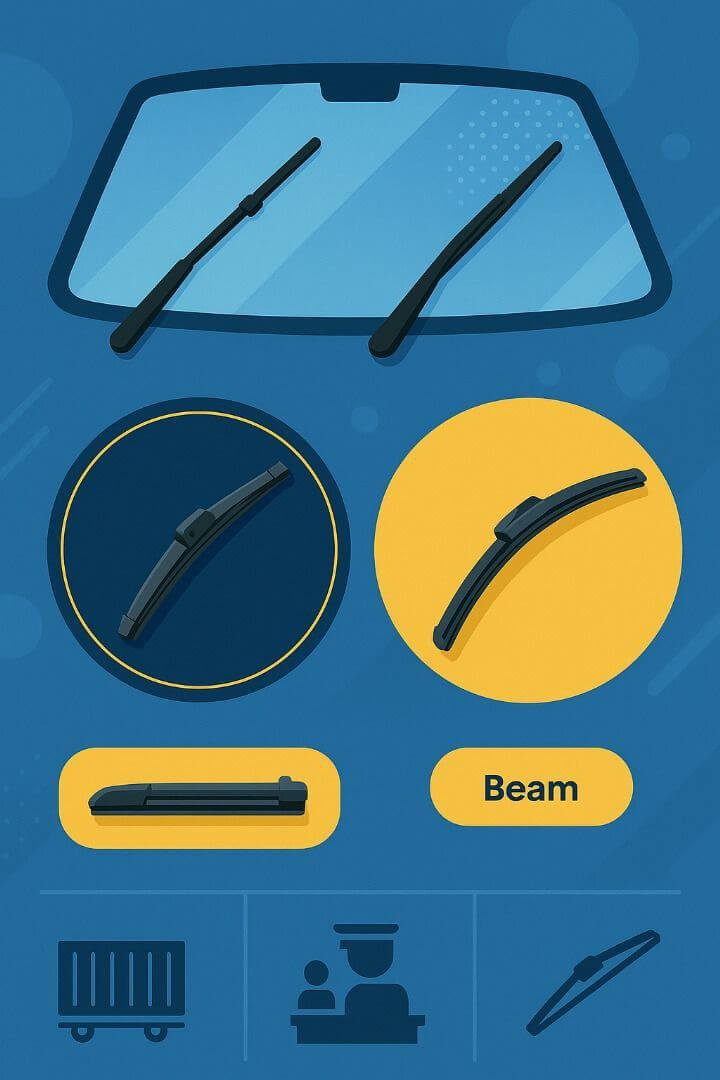
Conventional Wiper Blades: A simple frame (metal/plastic) with a rubber strip. They apply moderate pressure suitable for normal weather, offer good durability, and are cost-effective.
Beam (Frameless) Wiper Blades: A flexible plastic/silicone spine without a metal frame, delivering uniform pressure across the glass. They perform better in heavy snow/icing and are common on modern vehicles.
2) Import Essentials for Wiper Blades
1. Quality & Safety Standards
2. HS Code (Tariff)
3. Documents Required for Clearance
4. Packaging & Storage
3) Import/Export & Market Overview
4) Import/Export Volumes & Global Flow
5) Fastest, Easiest Route to Clear Wiper Blades
| Item | Short Description | HS Code |
|---|---|---|
| Automotive wiper blade | Safety component; conventional & beam types | 85124000 |
Final classification may vary with material (rubber/silicone), connector type, and packaging.
Need exact HS classification, standards approval, and document prep? Our team manages the file end-to-end.
Request a Proforma
FAQs
What is the HS Code for wiper blades?
Typically 85124000; the final decision depends on specs and accompanying items.
What documents are required for clearance?
Invoice, B/L, CO, standards/quality certificates, and inspection report where applicable.
Are beam blades better than conventional ones?
Beam blades provide uniform pressure and better snow/ice performance; conventional blades are more economical for everyday conditions.
Is a standards permit required?
Yes. Compliance with national/international standards (ISO/ASTM) and, if requested, confirmation by the National Standards Organization.
Specialized Auto Parts Clearance by Saba
Expert Consulting: Supplier selection, standards compliance, and document prep.
Fast & Reliable Clearance: Accurate procedures and minimized dwell time at customs.
End-to-End Follow-up: From order registration to final delivery, including regulatory coordination.
After-Clearance Support: Domestic transport support and inventory advice.
