.png)
Customs Clearance of Sports Goods & Equipment in Iran (HS Code + Documents & Permits)
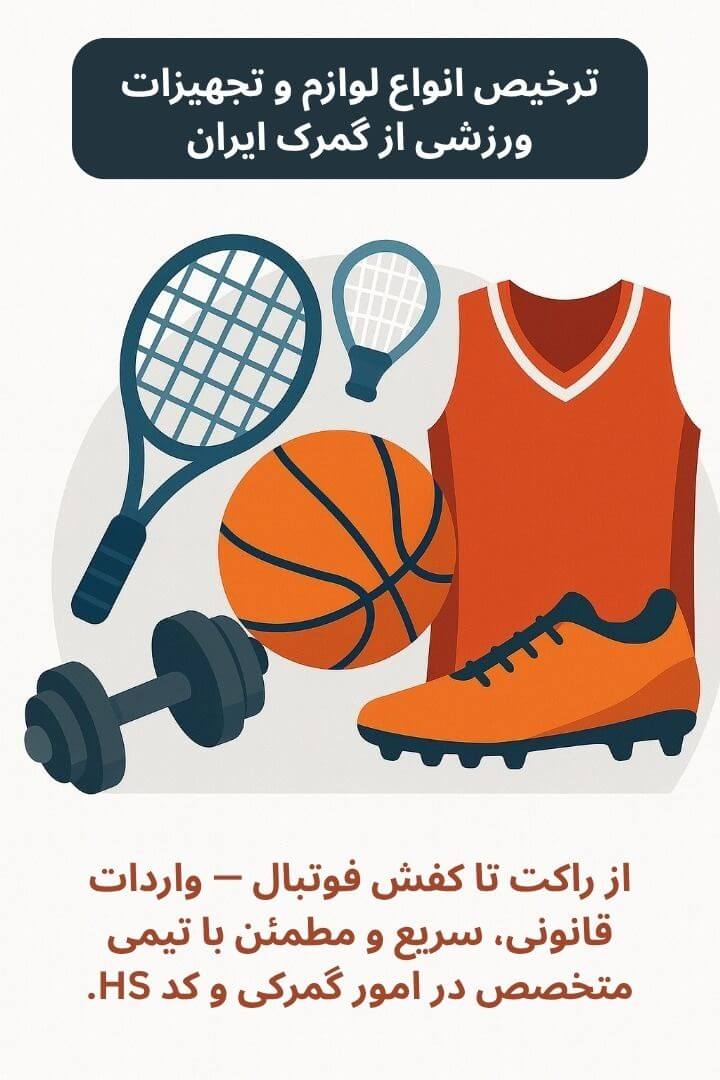
To estimate the time and cost for customs clearance of sports goods & equipment, contact the Saba Tarkhis experts.
Instant Free Consultation1) Types of Sports Goods & Equipment Eligible for Clearance
Fitness & Gym Equipment:
This group includes advanced machines such as treadmills, stationary bikes, elliptical trainers, steppers, and strength machines like weight-training stations, as well as accessories like dumbbells and barbells. Due to their importance in fitness training and muscle strengthening, these items are highly popular in gyms and homes. Importing these products usually requires safety approvals and standards relevant to sports equipment.
Ball Sports Equipment:
This includes balls for football, basketball, volleyball, tennis, and golf, along with accessories such as sports nets, portable goals, and basketball hoops. Related items like sports footwear and protective apparel also fall into this category.
Water Sports Equipment:
Essentials include swim goggles, caps, fins, kickboards, diving gear, and other water-sport accessories. Safety and lifeguard items such as life jackets are grouped here as well. Clearance of these items may require permits from bodies relevant to water sports.
Combat Sports Gear:
This category includes boxing gloves, mouthguards, focus pads, shin/forearm guards, and discipline-specific uniforms like kimono, taekwondo, and judo outfits. Safety is crucial and international safety standards are typically observed in production and distribution.
Outdoor Sports Equipment:
Includes camping, mountaineering, and other outdoor-sport gear. Examples are trekking tents, technical backpacks, ropes, and specialized footwear. These items typically must meet international standards for safety and resistance to various weather conditions.
2) Customs Tariffs & HS Codes for Sports Equipment
| Product Group | Example Items | HS Code |
|---|---|---|
| General Sports Equipment | Balls, nets, training aids, goals | 9506 |
| Games/Toys & Recreation | Toys, educational games | 9503 |
| Tabletop/Home Games | Chess, billiards, home entertainment | 9504 |
Final subheading selection depends on material, use-case, presence of electrical parts, packaging, and safety standards.
3) Key Points in the Sports Goods Clearance Process
Order Registration & Legal Permits:
Order registration for importing any goods—including sports equipment—via the National Trade System is mandatory. This allows you to officially bring sports goods into the country. Some equipment may require special permits from sports authorities, such as the Ministry of Sports & Youth or relevant federations. For example, professional/competition-grade equipment usually needs technical approvals.
Standards & Safety Regulations:
Many types of sports equipment must comply with national and international safety/quality standards. For instance, fitness machines should have safety certifications to minimize user risk. Items like swimming and diving gear may require specialized testing to verify safety and performance in real conditions.
Quality & Technical Inspection at Customs:
After arrival, certain electronic/mechanical equipment must be checked for quality and technical conformity to ensure they match declared specs and required standards. These checks—conducted by competent bodies—may include performance testing, safety evaluation, and even energy-consumption assessment.
Duties & Customs Charges:
A crucial step is calculating and paying customs duties/charges. These costs are based on the goods’ value and tariff rates. Some goods may be eligible for preferential tariffs or special discounts, e.g., imports from certain WTO members.
Expedited Clearance & Cost Reduction:
Using specialized customs brokerage services—such as Saba Brokerage—helps complete clearance quickly and efficiently. Thanks to experience and process familiarity, they can anticipate issues and provide solutions to avoid unnecessary delays.
4) Special Conditions for Import/Export of Sports Equipment
5) Exporters/Importers and Iran’s Position
Countries Exporting Sports Equipment to Iran
Exports of Sports Equipment from Iran
Import & Export Volumes of Sports Goods
6) Best Practices for Clearing Sports Goods from Customs
Preparing complete documentation: e.g., commercial invoice, bill of lading, certificate of origin, packing list, and other required papers.
Order registration in the National Trade System.
Obtaining necessary permits: specific items may require special approvals from relevant bodies.
Paying customs duties and related charges.
Using customs brokerage services to streamline the process.
7) Required Documents for Clearing Sports Goods & Equipment
1. Commercial Invoice
Issued by the seller, detailing the goods: seller/buyer names and addresses, invoice date, order number, type/quantity, unit and total price, payment terms, and shipping information. Customs uses this to determine customs value and calculate duties/charges.
2. Bill of Lading
A transport document issued by the carrier (sea/air/road/rail) with details of shipment from origin to destination, including shipper/consignee, B/L number, package type/quantity, and carriage terms. It evidences legal entry of goods.
3. Certificate of Origin
Specifies the manufacturing country, usually issued by the Chamber of Commerce or similar body. Needed for tariff preferences and determining customs duties; also enhances supply-chain transparency and fraud prevention.
4. Packing List
Provides exact information on number of packages, dimensions, weight, and content of each package. Helps customs verify the shipment and ensure consistency with the invoice; also useful for freight/warehousing calculations.
5. Order Registration Permit
Mandatory registration in the National Trade System for imports. Confirms the order is legally placed and the import permit issued; must be obtained prior to arrival and presented during clearance.
6. Customs Declaration Form
Completed by the importer and submitted to customs, containing details on type, quantity, and value of goods. Accuracy is essential; it is the basis for calculating tariffs and related fees.
7. Inspection Certificate
Required for some equipment—especially advanced tech items or those directly affecting consumer health. Confirms compliance with international/national standards on quality, performance, and safety; typically issued by reputable inspection companies.
8. Insurance Certificate
Proof of insurance during transit, ensuring compensation in case of loss/damage. Especially important for high-value or sensitive goods.
9. Release Note
Issued by the carrier after payment of freight/warehousing charges, enabling the importer to take delivery from the customs warehouse.
10. Warehouse Receipt
Issued upon entry of goods into the customs warehouse, confirming custody under customs supervision; required for release and to verify proper warehouse entry.
11. Health & Safety Certificate
Mandatory where equipment contacts the body directly or contains specific materials. Confirms compliance with health and safety requirements.
12. Tax and Duties Payment Receipts
After calculating customs duties and other charges, the importer must settle all payments and present receipts (customs duties, VAT, and other ancillary fees).
Need precise HS determination, permits, and document preparation? Our team manages the case end-to-end.
Submit a Proforma Request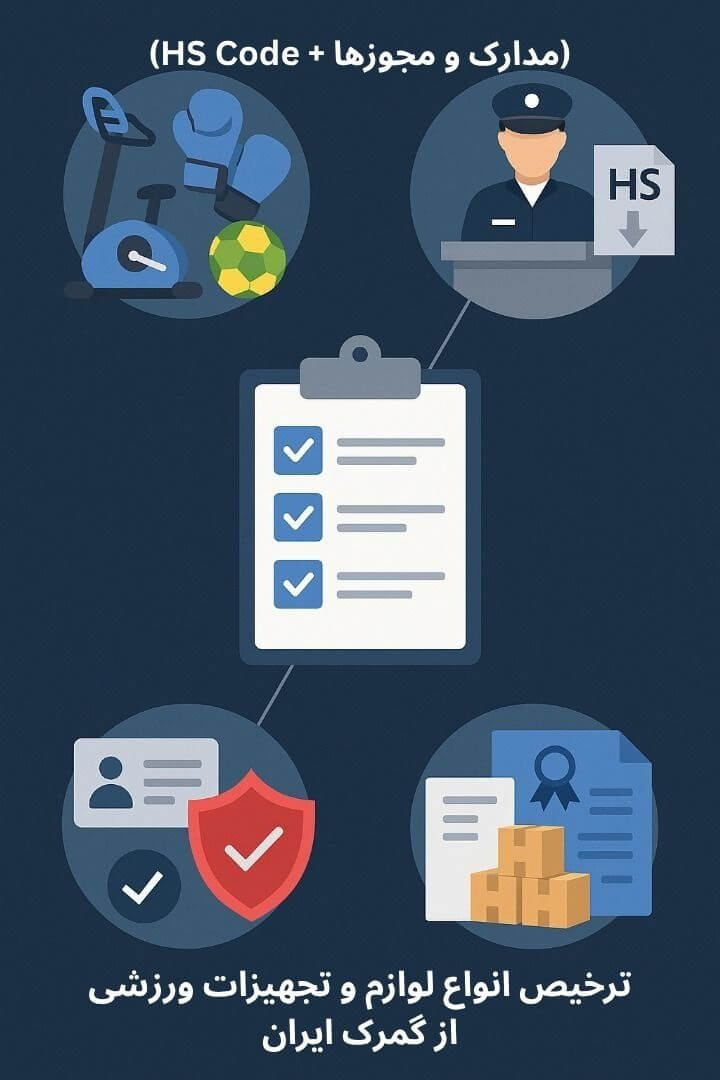
Frequently Asked Questions
What are commonly used HS codes for sports equipment?
Per your text: General sports equipment 9506, toys/recreation 9503, and tabletop/home games 9504. Final determination depends on the specific item.
What permits are required to import sports equipment?
Order registration in the National Trade System, approvals from the Ministry of Sports/federations where applicable, and for specific items, MIMT permits and safety/standard certificates.
Which documents are essential for clearance?
Invoice, bill of lading, certificate of origin, packing list, order registration permit, customs declaration, inspection/insurance certificates, warehouse receipt, release note, and duty payment receipts.
Premium Customs Services by Saba Brokerage
Our premium customs services—delivered by an experienced professional team—offer fast and efficient clearance of sports equipment across all Iranian customs. Our services include:
Specialized & Free Consulting: We provide precise guidance on customs tariffs, required permits, and optimal import routes—helping you minimize costs and timelines.
Order Registration & Permits: We handle all order registration steps and obtain necessary permits from relevant bodies such as the Ministry of Sports & Youth and other organizations—so you can focus on your core tasks.
Customs Clearance: From the moment goods enter customs to final release, we manage the process using up-to-date, professional techniques to ensure maximum quality and speed.
Transport & Logistics: Beyond customs, we also cover international and domestic transport from origin to final destination—ensuring safe and timely delivery.
By using Saba Brokerage, you can rest assured that clearance of sports equipment will be optimized and high-quality. We support you at every step to smoothly overcome all customs and legal challenges.
