• Head Office: Unit 502, 5th floor, No. 222, Kashani Ave, Tehran
  • Working Hours: Sat to wed, 8.30 AM - 5 PM (Tehran Time)
  • Phone

    +989121536145

Customs clearance of propionic acid (HS Code + documents and permits)
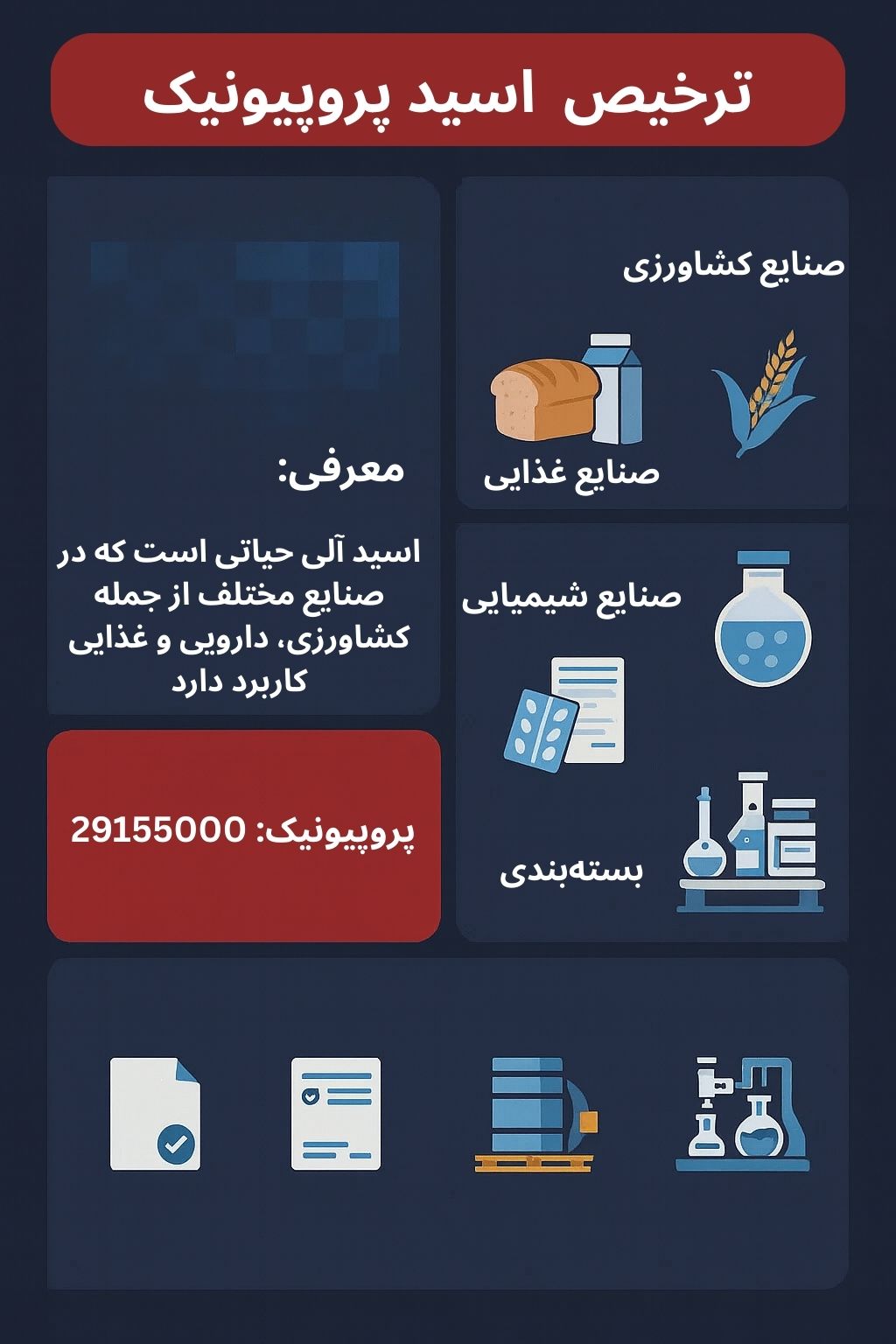
Customs clearance of propionic acid Propionic acid (Propionic Acid), with the chemical formula C₃H₆O₂, is one of the essential organic acids used in various industries including food, agriculture, livestock, chemical, and pharmaceutical. Due to its strong preservative and antifungal properties, this substance has wide applications and, especially in the production and storage processes of sensitive products such as bread, animal feed, and dairy products, plays a key role. Given the high consumption and multiple applications of this substance in Iran, importing propionic acid is considered one of the important sectors in the trade of chemicals.
Explanation of the clearance steps for this product

To estimate the time and cost of propionic acid clearance (food/pharmaceutical/industrial grade), contact the experts at Saba Tarkhis.

Instant free consultation

1) Applications of propionic acid in various industries

Applications of propionic acid in various industries
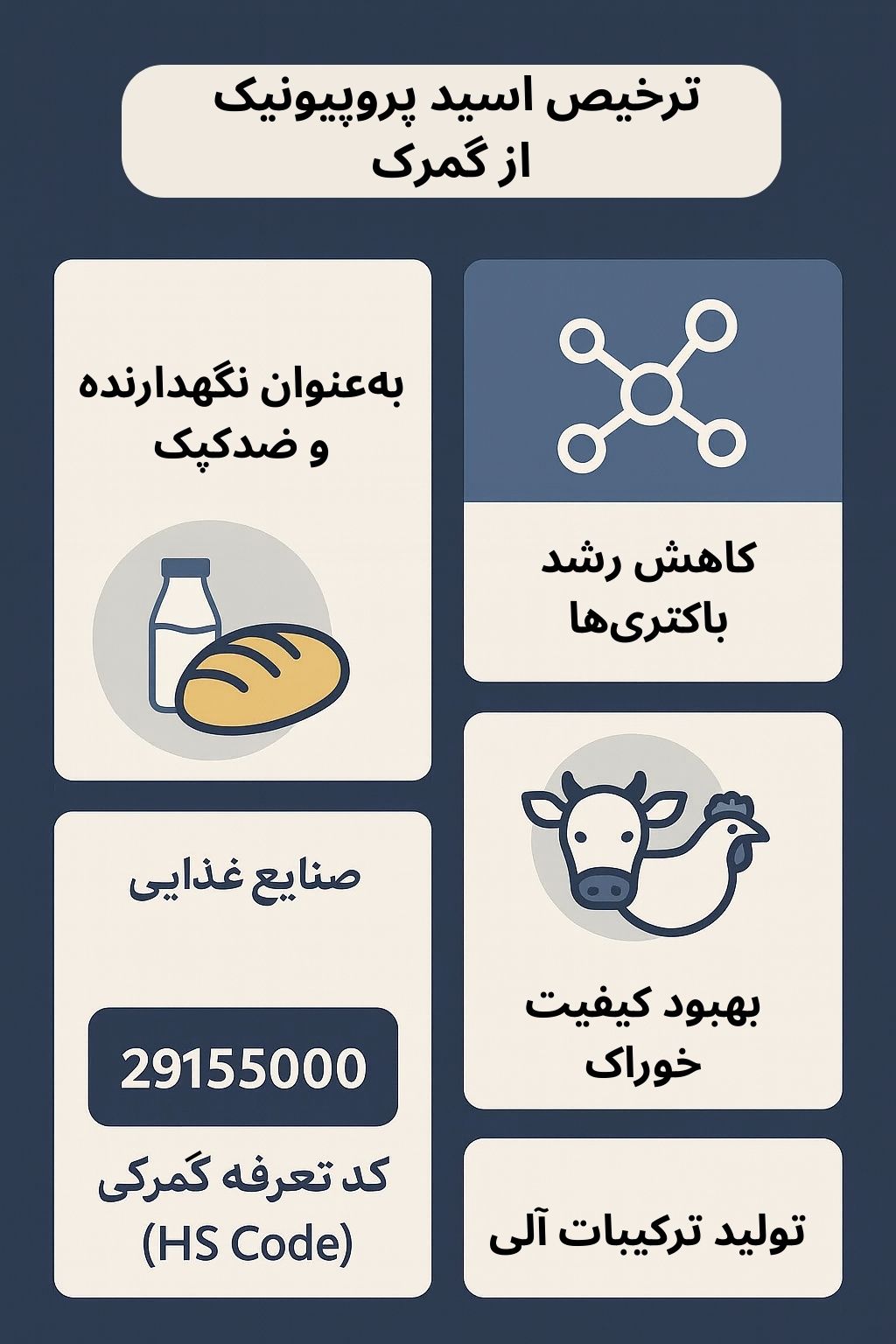
Food industry: Propionic acid is used as an antifungal preservative that can improve the shelf life of food products, especially bread, cakes, cookies, and dairy products. It reduces the growth of molds and undesirable bacteria and prevents premature spoilage of food.
Livestock and poultry industry: In animal husbandry, this acid is used to prevent spoilage of animal feed. It improves feed quality and prevents the production of toxic substances caused by microbial activity in feed.
Agriculture: In this industry, propionic acid is used as a raw material for producing herbicides and pesticides. This application plays a role in preventing the growth of fungi and harmful insects, which is very important for maintaining the health of agricultural products.
Chemical industry: In various areas of the chemical industry, propionic acid is used as a feedstock for producing plastics, resins, lubricants, and other chemical compounds.
Pharmaceutical industry: In the production of medicines and hygiene products, propionic acid is used as a protective and preservative agent and plays a key role in the formulation of some medicines and pharmaceutical compounds.

2) Customs tariff code of propionic acid (HS Code)

Customs tariff code of propionic acid (HS Code) The HS Code of propionic acid falls within the category of organic chemical compounds. The standard customs code for this substance is 29155000. This code is one of the most important product identifiers in the clearance and customs declaration process and must be entered precisely in the customs declarations. Correctly registering this code helps you avoid any legal and administrative issues and complete the clearance process faster.

3) Steps and key points in clearing propionic acid from customs

Clearing propionic acid, as a sensitive chemical substance, requires going through precise steps, each of which is highly important. Strictly following these steps helps expedite the clearance process and prevent any delays or issues at customs.

1. Obtaining the necessary permits

Obtaining the necessary permits: For importing propionic acid, obtaining the required permits from the relevant authorities is mandatory. Among the most important are the Ministry of Health permit for importing chemicals used in food and pharmaceutical applications, and the National Standards Organization permit to ensure product quality. These permits must be obtained before the customs procedures to avoid delays in clearance.

2. Completing the customs declaration

Completing the customs declaration: Completing the customs declaration is one of the crucial steps in clearing propionic acid. The declaration must accurately state information such as type of packaging, net and gross weight, exact quantity, value of the goods, and the HS Code. Any error or omission in completing this information may cause delays in clearance and even customs fines.

3. Safe packaging and transportation

Packaging and transportation: Due to its corrosive nature and strong odor, propionic acid requires appropriate packaging and safe transportation conditions. Robust, standard packaging to prevent leakage or contamination is mandatory. In addition, during transportation, adherence to international safety guidelines such as ADR (regulations for transporting dangerous goods) is necessary.

4. Quality and health testing

Quality and health testing: Since propionic acid is used in the food and agriculture industries, it must undergo precise quality tests. Conducting the necessary tests in accredited laboratories to ensure purity and product quality is mandatory. These tests must confirm that the product complies with national and international standards.

Need precise HS Code determination, obtaining health/standards permits, and preparing documents? Our team manages the case end-to-end.

Submit a pro forma invoice request

4) Special conditions for importing and exporting propionic acid

Special conditions for importing and exporting propionic acid Propionic acid, due to its preservative and antifungal properties, is a highly consumed substance in the food, agriculture, and chemical industries. Although domestic production of this substance in Iran is limited, the extensive demand has made propionic acid imports an important part of the country’s foreign trade. In this section, we explain the details of importing and exporting this substance at the national and global levels and the specific conditions related to it.

Countries exporting propionic acid to Iran

Iran supplies most of its domestic need for propionic acid through imports. The main countries exporting this product to Iran are: China: the largest producer of propionic acid in the world and, due to low production costs and mass production, one of Iran’s main suppliers. Germany: a producer of high-quality propionic acid globally; exports to Iran are mainly favored because of high production standards and high purity. India: another producer that, thanks to competitive production costs and a growing chemical industry, supplies a large share of the propionic acid market. United States: one of the leading countries in producing this substance; although due to high production and export costs, it covers a smaller share of Iran’s market. Other European countries: in addition to Germany, other European Union countries are also recognized as exporters of propionic acid to Iran due to their high quality standards.

Export of propionic acid from Iran

Given that Iran has limited production of propionic acid, its export from Iran is very minimal, and the country’s focus is mostly on importing this product to meet domestic demand. This demand is mainly concentrated in the food and agriculture industries, and due to population growth and the development of animal husbandry and agriculture, importing this substance has become necessary.

Import and export volume

The volume of propionic acid imports to Iran varies annually depending on domestic market demand and economic fluctuations. In recent years, due to the growing food, livestock, and agriculture industries, imports of propionic acid to Iran have been on an upward trend. Imports continue on an ongoing basis, and Iran is generally recognized as one of the major importers of propionic acid in the region.

5) Global circulation and international market of propionic acid

Global circulation of propionic acid The global circulation of propionic acid is also continuously increasing due to its wide applications in various industries, especially food and chemical. Developed countries such as the United States and European countries have high demand for this substance due to its extensive use in advanced industries. At the same time, developing countries, because of the growth of food and agriculture industries, also account for a significant portion of imports of this substance.

Major exporting countries worldwide

Major exporting countries of propionic acid in the world China: recognized as the largest exporter of propionic acid in the world, covering broad markets from Asia to Europe and Latin America. United States: one of the leaders in producing high-quality propionic acid worldwide, exporting to many developed and developing countries. Germany: one of the major European producers that, due to high quality standards, meets a substantial part of global needs for propionic acid. India: as a developing country and producer with competitive pricing, it has a significant share in exporting this product to other countries.

Major importing countries worldwide

Major importing countries of propionic acid in the world European Union countries: due to the wide application of this substance in the food and chemical industries, European countries are among the largest importers of propionic acid. United States: despite domestic production, this country has limited imports due to the high demand of its domestic industries. Asian countries: Asian countries such as India and China, in addition to production, because of the rapid growth of agriculture and food industries, are considered important importers of propionic acid. Iran: one of the major importers of this substance in the Middle East, where imports have continuously increased due to domestic industrial needs.

6) Required documents for clearing propionic acid

Required documents for clearing propionic acid Clearing propionic acid from customs requires a precise and complete set of legal documents that must be prepared and submitted with full attention to detail. These documents are mandatory to ensure compliance with customs and health regulations and are highly effective in facilitating and expediting the clearance process.
1. Purchase invoice (Invoice)
The purchase invoice is one of the fundamental documents in the clearance process and must include the following precise information: the seller’s and buyer’s names and addresses; invoice issuance date; a full description of the goods including name and type, quantity, and packaging; unit price and total price of the goods; payment terms and any discounts or additional costs. This document is legally necessary to prove ownership and the value of the imported goods and helps customs determine the actual value of the goods.
2. Bill of Lading
The Bill of Lading is a document issued by the transport company and includes the following vital information: details related to transportation of the goods; cargo specifications, including type and quantity; information of the consignor and consignee. The Bill of Lading is very important as proof of ownership and transfer of goods to customs and plays a crucial role in the clearance process.
3. Customs declaration
The customs declaration must be filled out precisely and with all details observed. The information that must be included in this declaration is: type of goods and their description; exact quantity and net and gross weight; total value of the goods and the HS Code. This declaration must be submitted as soon as the goods arrive at customs, and the accuracy of the information directly affects the clearance process.
4. Health permits and standards
Importing propionic acid, especially for use in the food and agriculture industries, requires health permits from the Ministry of Health and standard approvals from the National Standards Organization of Iran. These permits ensure that the goods comply with national and international standards, thereby ensuring product safety and quality.
5. Laboratory documents
Quality and health tests must be carried out by accredited laboratories and the relevant certificates issued. These documents include test results to confirm the purity and quality of propionic acid and are particularly critical in the clearance process of food goods. These confirmations indicate that the product meets the required standards and is usable in the relevant industries.
6. Certificate of Origin
The Certificate of Origin is a document issued by the Chamber of Commerce of the exporting country and indicates the country of origin of the goods. This certificate is very important for determining customs tariffs and monitoring product quality and may affect the clearance process.
7. Insurance document
The cargo insurance document covers potential risks during transportation. This document is mandatory to compensate for any possible damage or loss of the goods during transport and ensures that financial coverage exists if a problem occurs.
8. Quality Control Report
If the goods have undergone quality control tests, submitting the relevant reports can help expedite the clearance process. These reports confirm that the product has been produced and tested under standard conditions.
9. Financial documents
Documents such as payment receipts, financial papers, and banking information showing payment of fees and duties related to the import. These documents are mandatory to ensure settlement of accounts and the absence of financial debts to customs.
10. Commercial card
For natural and legal persons, having a valid commercial card is mandatory. This card must be up to date and available at the time of submission to customs so that the clearance process proceeds properly.
Explanation of the clearance steps for this product

Frequently asked questions

What is the HS Code of propionic acid?

According to the text, the standard customs code for propionic acid is 29155000 and it must be entered precisely in the declaration.

Which permits are required for import?

Permits from the Ministry of Health (for food/pharmaceutical applications) and approvals from the National Standards Organization to ensure quality should be obtained before customs procedures.

How should safe packaging and transportation be handled?

Use robust, standard packaging to prevent leakage/contamination and follow international regulations such as ADR for transporting dangerous goods.

Which countries are Iran’s main suppliers?

According to your text: China, Germany, India, and to some extent the United States; also several other European countries.

    Specialized propionic acid clearance services by Saba Brokerage

    Saba Brokerage is one of the most reputable and professional customs clearance companies in Iran. With years of experience in clearing chemical goods, including propionic acid, it provides comprehensive and specialized services to its clients. These services include the following:

    Obtaining the necessary permits: With expertise in securing health permits and quality standards from relevant bodies such as the Ministry of Health and the Standards Organization, the company effectively expedites the import process.

    Completing the customs declaration: Experienced experts with adequate knowledge of customs regulations perform all stages of completing the customs declaration with accuracy to prevent any delays in clearance.

    Consultation on transportation and packaging: Given the sensitive chemical nature of propionic acid, specialized consultation is provided on safe packaging and standard transportation to prevent damage to the goods.

    Continuous follow-up and updates: A key feature of these services is continuous follow-up and informing clients at all stages of clearance. This ensures clients are well aware of their clearance status and that necessary actions are taken quickly if problems arise.

    Speed in clearance: The team’s extensive experience in clearing chemical goods and close cooperation with various customs offices has resulted in faster and more accurate clearance. This not only reduces costs related to storage in customs warehouses but also delivers the goods to the client in the shortest possible time.

    With these special services, importers of propionic acid can benefit from a fast, reliable, and hassle-free clearance process for their goods.

    Back to the list