.png)
Propane Customs Clearance in Iran (HS 2711.12.00 + Documents and Permits)
For a time and cost estimate of propane clearance, contact the experts at Saba Tarkhis.
Immediate and Free ConsultationMain Applications of Propane
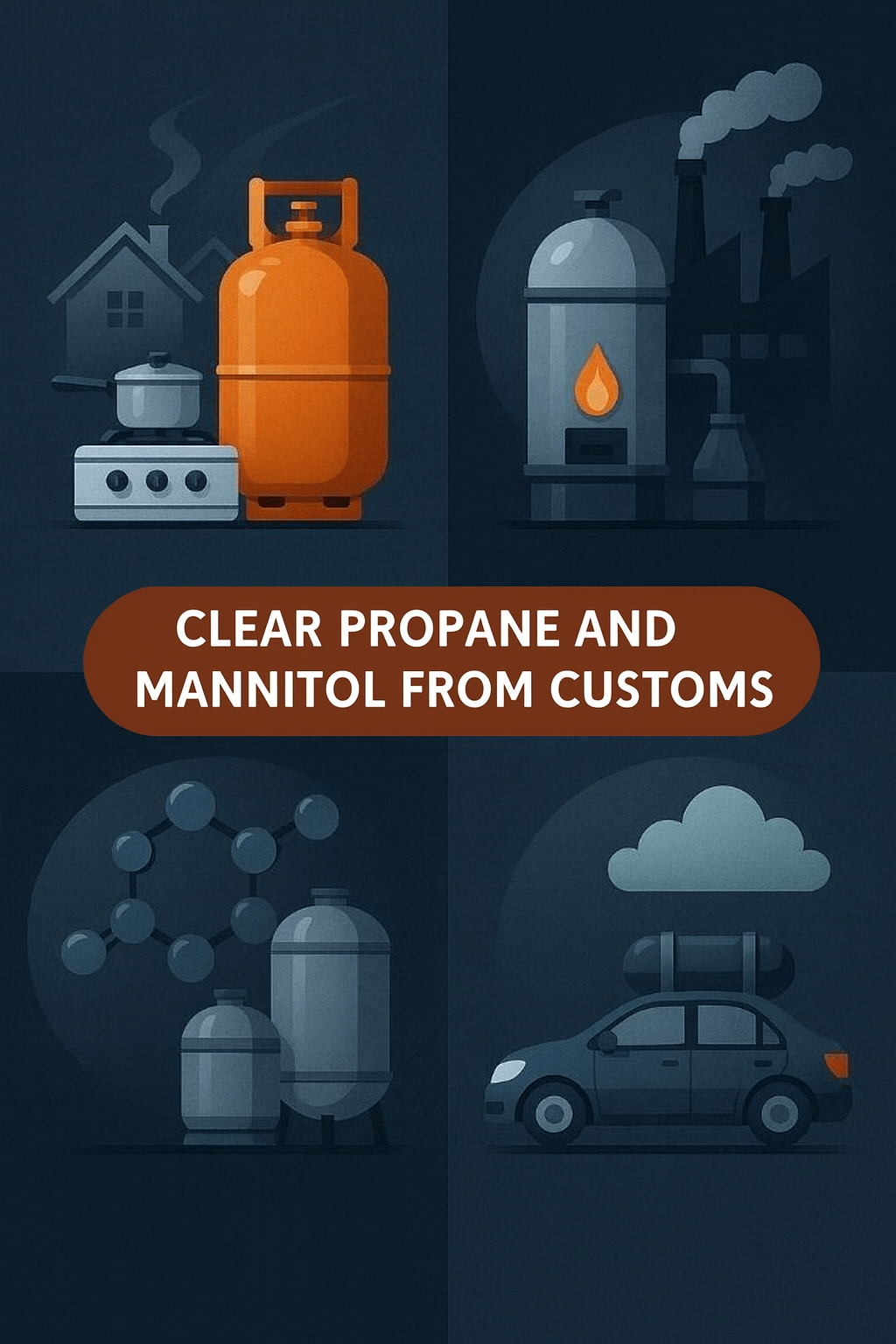
- Vehicle fuel: Propane is a key component of liquefied petroleum gas (LPG) used as an alternative fuel for vehicles. Compared with gasoline and diesel, it produces fewer greenhouse gases, which is why it is considered a clean and economical fuel in many countries.
- Heating and cooling: Propane serves as an energy source in gas heaters, water heaters, and central heating systems. In cooling systems, propane is also used as an efficient refrigerant with high performance and a more environmentally friendly profile than many other refrigerants.
- Petrochemical industry: Propane is a feedstock for producing chemicals such as propylene—a key material in the manufacture of plastics, synthetic fibers, and chemicals.
- Power generation: Propane is used as a fuel in electricity generators, especially in remote areas not connected to the grid. Thanks to its portability and high efficiency, it is recognized as an emergency backup fuel for critical power supply.
- Cooking and LPG cylinders: Propane is filled into LPG cylinders for kitchens, restaurants, and camping. These cylinders are widely used worldwide due to their portability and high heat output.
Propane Tariff and HS Code
The propane tariff is influenced by factors such as the country of origin, packaging type, trade agreements between countries, and transport standards. Importers must carefully consider these factors, since propane—being a sensitive good—requires thorough quality and safety checks during transport and storage stages.
Technical and Safety Notes for Propane Clearance
Special Conditions for Propane Import and Export (Complete and Expert Overview)
1) International regulations for transporting propane
2) Export restrictions
3) Special import permits for propane
4) Propane price controls
5) Propane import and export volumes to and from Iran
6) Global circulation of propane
7) Major global exporters of propane
- United States: One of the largest propane exporters, supplying a substantial share of global demand.
- Qatar: Plays a key role in global propane supply as one of the largest LPG producers.
- Russia: Among the largest exporters of LPG and propane to European and Asian markets.
- Saudi Arabia: Another major global producer and exporter of propane.
8) Major global importers of propane
- Japan: One of the largest propane importers due to high energy needs across industries.
- South Korea: Also a major importer thanks to widespread use in industry and households.
- India: High demand driven by rapid industrial development and a large population.
- China: A key global propane importer using the gas across various industries.
Required Documents for Propane Customs Clearance
Commercial invoice
The commercial invoice is fundamental and includes the product specifications, price, sales terms, and supplier details. It should state the seller’s and buyer’s names and addresses, transaction date, type and quantity of propane, and final price. To facilitate clearance, provide the invoice in both Persian and English.
Certificate of origin
This certificate verifies the origin of the goods and is crucial for tariff determination. It must be issued by the Chamber of Commerce or an accredited body in the exporting country and indicate the country and specifications under which the propane is imported.
Bill of lading
A vital transport document recording shipment details, including carrier name and address, transport mode, and destination information. It evidences title during transit and serves as a valid document in customs procedures.
Safety and quality certificates
These must be issued by internationally recognized bodies and confirm compliance with international safety and quality standards. They may include ISO and CE certificates and are submitted to ensure the propane’s safety and quality.
Import permits
Importing propane requires legal permits, including safety approvals from relevant organizations, as well as environmental and commercial permits. Importers must ensure all permits are in place to avoid legal issues during clearance.
Standards certificate
This confirms conformity with national and international standards. Obtaining it from Iran’s National Standard Organization or other accredited bodies ensures the goods are imported safely and in line with applicable standards.
ID of the legal representative
If a legal representative or broker handles clearance, provide their identification along with a power of attorney. These documents must include the representative’s full details and confirm their authority to act.
Company registration documents
For commercial entities, submit company registration documents and the economic code. These must clearly confirm the importer’s legal identity and that they are authorized to import hazardous goods.
Loading certificate
This must evidence proper loading of the propane and support transport safety. It may include required confirmations from the carrier, indicating the propane was loaded under safe conditions.
Insurance certificate
In some cases, transport insurance documentation is mandatory. Insurance should cover potential hazards during transit and ensure compensation for losses in case of incidents.
| Product | Short Description | HS Code |
|---|---|---|
| Propane | Liquefied hydrocarbon gas; flammable | 2711.12.00 |
Final classification depends on presentation (cylinder/tank), purity, packaging, and application.
Need precise HS determination, permits, and document preparation? Our team manages the entire case end to end.
Submit Pre-Invoice Request.png "توضیح مراحل ترخیص این محصول")
Frequently Asked Questions
What is the HS Code for propane?
As stated, propane is classified under 2711.12.00 (liquefied gases); the final line depends on shipping documents, purity, and application.
What permits are required to import propane?
As applicable: safety approvals, national standards certification, environmental permits, and other relevant trade permits; along with transport documents, certificate of origin, and insurance.
Which regulations govern propane transport?
In accordance with international dangerous goods rules including ADR (road) and IMDG (sea), using standard tankers/cylinders and safety markings.
Special Customs Clearance Services by Saba Brokerage
Saba Brokerage is one of Iran’s leading firms offering specialized services for clearing propane and other sensitive goods. Services include:
Expert consulting and risk forecasting: Our expert team provides specialized advice on customs laws and safety points to help importers complete propane clearance quickly and without issues.
Preparation of documents and legal permits: We prepare all required documents, including safety certificates, import permits, and standards certifications, and submit them to customs to ensure smooth clearance.
Coordination with oversight bodies: We liaise with organizations such as the National Standards Organization and the Environmental Protection Organization to obtain all approvals required for dangerous goods like propane.
Safe transport: Given propane’s hazardous nature, we work with reputable carriers specialized in dangerous goods to ensure safety and security through to final destination.
Cost reduction and faster clearance: A key benefit is optimizing the process to reduce customs and logistics costs. With efficient methods and long experience, clearance is completed quickly and cost-effectively.
Ultimately, with specialized knowledge and years of experience in clearing hazardous goods including propane we provide the best customs solutions so importers achieve fast, safe, and reliable clearance.
