• Head Office: Unit 502, 5th floor, No. 222, Kashani Ave, Tehran
  • Working Hours: Sat to wed, 8.30 AM - 5 PM (Tehran Time)
  • Phone

    +989121536145

Customs Clearance of Gluconic Acid (HS Code + Documents & Permits)
Customs clearance of gluconic acid — Gluconic Acid is a highly versatile organic compound that, due to its distinctive physical and chemical properties, is used across multiple industries. It plays an important role in food, pharmaceutical, chemical, and personal care sectors. Thanks to its strong ability to adjust pH, sequester metal ions, and extend product shelf life, it is widely valued. Importing this product into Iran requires precise customs procedures and compliance with various regulations.
Explanation of the clearance steps for this product

For accurate estimates of the clearance time and cost for gluconic acid (food/pharma/industrial grade), contact the Saba Tarkhis experts.

Instant & Free Consultation

1) Specialized Applications of Gluconic Acid

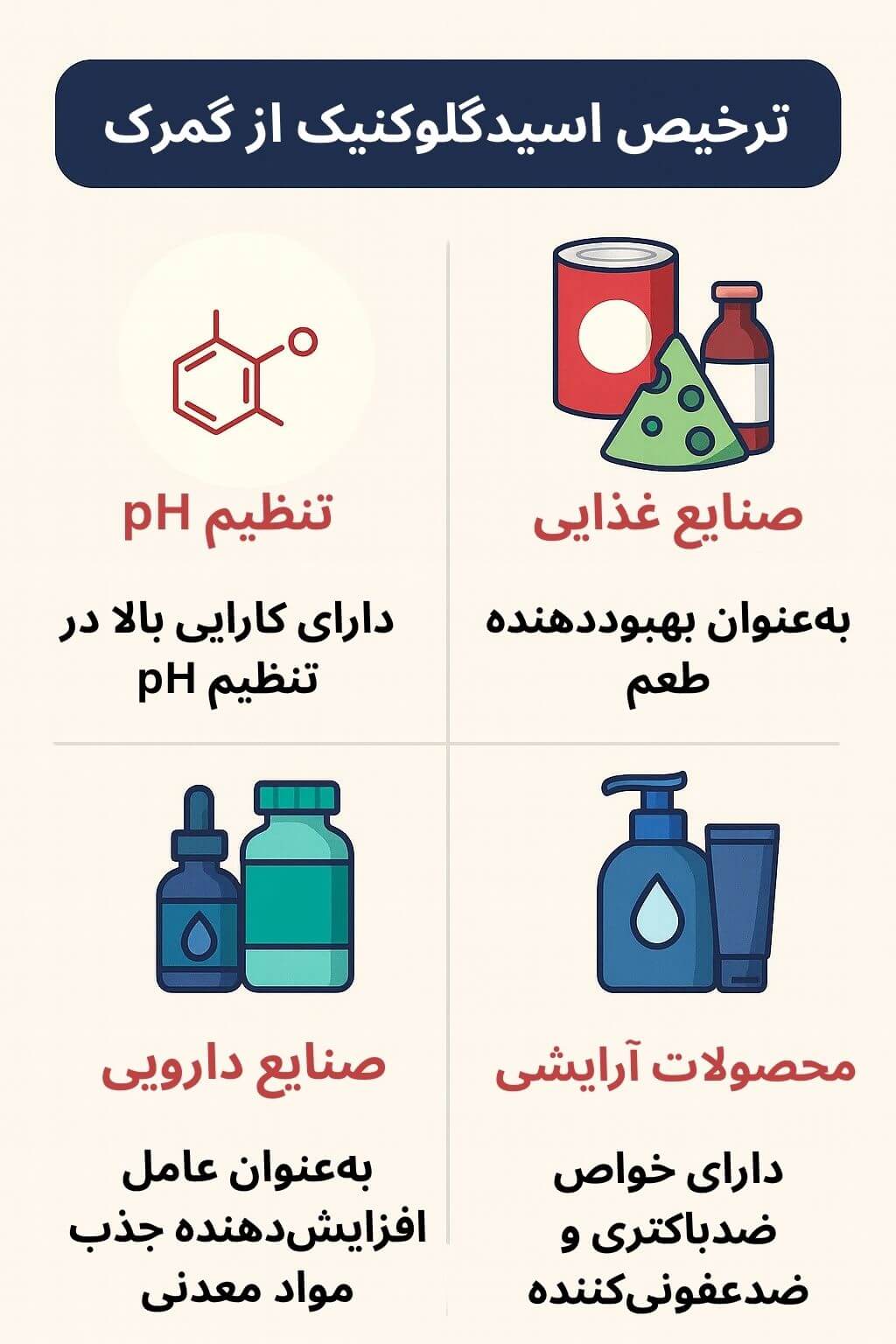
Food industry: Gluconic acid is used as an additive to improve taste, preserve quality, and extend shelf life of foods such as beverages, dairy, and canned products. In addition, its pH‐adjusting capability makes it an ideal additive in food processing. Owing to its biodegradability and positive impact on flavor, it’s among the most widely used acids in food applications.
Pharmaceuticals: In pharmaceuticals, gluconic acid acts as an enhancer of mineral absorption such as calcium. This feature has led to its use in dietary supplements and fortifying medicines. Also, due to its antibacterial properties and ability to support biological processes, it is used in the manufacture of antiseptic drugs.
Chemical industry: Gluconic acid is a powerful chelating agent in chemical processes and cleaning product manufacturing. It can remove unwanted metal ions from the medium and, by preventing their negative impacts, helps maintain product quality. Therefore, it is a key component in many industrial and household cleaners.
Personal care & cosmetics: In cosmetics and hygiene products, gluconic acid is used for its antibacterial and disinfecting properties in creams, lotions, and sanitizers, improving product performance and effectiveness.

2) Steps for Customs Clearance of Gluconic Acid

Due to its health and chemical sensitivities, customs clearance of gluconic acid demands accuracy and full compliance with customs rules and requirements. The process involves several stages that must be completed carefully and knowledgeably.

HS code and tariff

Gluconic acid falls under organic compounds with HS code 29181600. Selecting the correct HS code is crucial for determining customs duties and total import costs. Tariffs may vary by country of origin and applicable trade agreements, so precise classification and consultation with customs experts can lower import expenses.

Import permits and standard approvals

Importing gluconic acid requires specific permits from relevant agencies. For use as a food additive, approvals from the Ministry of Health and the Food & Drug Organization are mandatory. International quality standards must also be observed to ensure compliance. If imported as a chemical, the relevant chemical import permits are required.

Order registration in the National Trade System

Order registration is one of the most important stages. All product details—weight, volume, packaging type, value, and other information—must be entered precisely and must match the commercial invoice and packing list. Inaccuracies can cause clearance delays and financial issues.

Submission of transport documents

Accurate and complete transport documents are another prerequisite. Documents such as the bill of lading, commercial invoice, and packing list must contain precise information about the goods. Details like net/gross weight, quantity, and value must match the order registration and other paperwork.

Customs and standards inspections

Before clearance, goods are subject to customs and standards inspections to ensure quality and compliance. When imported for food or pharmaceutical use, additional inspections by the Food & Drug Organization and National Standards are performed.

Need precise HS classification, health/standards permits, and document prep? Our team manages the entire case end-to-end.

Request a Proforma Quote

3) Special Conditions for Import & Export of Gluconic Acid

Gluconic acid, with broad applications in food, pharma, and chemical industries, plays a major role in international trade. Its import/export is influenced by global demand, major producers, trade agreements, and domestic production capacity. Below we comprehensively review import/export conditions, including trade volumes, exporting and importing countries, and best practices for customs clearance.

Countries exporting to Iran

Due to strong demand in Iran’s food, pharma, and chemical sectors, gluconic acid is mainly imported from key producers such as China, India, and several European countries. These nations, with strong chemical manufacturing infrastructure, are among the largest global producers/exporters. According to available data, imports to Iran are ongoing and annually total about 100 to 200 tons, varying with domestic needs. In recent years, rising consumption in food and pharma has increased import demand.

Countries importing from Iran

Production of gluconic acid in Iran is limited; hence exports are modest on a global scale. However, certain Iranian industries manufacture high-quality gluconic acid that is exported to neighboring and international markets, including Iraq, Afghanistan, and some Central Asian countries. Owing to product quality, demand for Iranian exports to these destinations is growing.

Global trade volume of gluconic acid

Global trade in gluconic acid is expanding due to rising multi-industry demand. China is recognized as the largest producer and exporter, commanding a major market share with advanced technology and infrastructure. India, the United States, and several European countries are also major producers with significant roles. Worldwide exports are estimated at over 100,000 tons annually and continue to grow, driven by broad usage across food, pharma, and chemical sectors—especially in developed countries.

Leading global exporters

Besides China and India, European countries such as Germany and France are active exporters. The United States, as one of the largest producers, also plays an important supply role. These countries ship to Iran and other Middle East markets, controlling a significant portion of global trade.

Major global importers

The largest importers include EU countries, the United States, Japan, and Asian nations such as South Korea. Due to high consumption in pharma and food industries, their import needs are substantial. Overall, developed countries import larger volumes given higher industrial demand and consumer market size.

4) Required Documents for Clearance of Gluconic Acid

Clearing gluconic acid from customs requires a set of carefully prepared documents. These papers are vital for speeding up clearance and preventing potential issues.
Commercial Invoice: Includes product name, quantity, unit price, and total value. It establishes the true value and is used to calculate customs duties.
Packing List: Must detail the number of packages, packaging type, and product weight (net and gross). It helps inspectors match physical cargo with recorded details.
Bill of Lading: Specifies transport details, carrier/consignee, and mode (sea/air/road). Proper issuance prevents issues at clearance.
Certificate of Origin: Indicates the manufacturing country, enabling correct duty application and compliance checks.
Health permits & standards: For food or pharmaceutical imports, obtain approvals from the Ministry of Health and the Food & Drug Organization. These confirm quality and safety per international standards.
Order registration (National Trade System): Before import, register the order. Enter all details—weight, value, quantity—accurately to avoid delays.
Inspection Certificate: In some cases, cargo requires inspection prior to clearance to confirm conformity in quality and quantity.
Proforma Invoice: A preliminary document stating price and payment terms; often used as the basis for order registration and initial steps.
Certificate of Analysis (COA): Mandatory for gluconic acid; details the chemical composition. Usually issued by the manufacturer, ensuring purity and quality.
Explanation of the clearance steps for this product

Frequently Asked Questions

What is the HS Code of gluconic acid?

Per your text, the customs tariff code for gluconic acid is 29181600 and is the basis for duty calculation and customs declaration.

What permits are required for import as a food additive?

Ministry of Health and Food & Drug Organization approvals are mandatory; compliance with international quality standards must be verified.

What are the key points for order registration?

Weight, volume, packaging type, and value must exactly match the invoice and packing list when entered into the National Trade System to prevent delays.

Who are the main suppliers for Iran’s imports?

Based on the text, China, India, and several European countries are the main sources of gluconic acid for Iran.

    Saba’s Specialized Services for Gluconic Acid Clearance

    For goods like gluconic acid, a professional team familiar with customs regulations is essential. Customs brokerages offer comprehensive, specialized services so importers can complete clearance quickly, smoothly, and cost-effectively. Key services include:
    Specialized tariff/HS selection consulting: Expert advisors recommend optimal HS lines to minimize duties and streamline clearance. Permit coordination: Brokers obtain all necessary approvals from agencies such as the Ministry of Health and the Food & Drug Organization for sensitive goods like gluconic acid. Fast, trouble-free clearance: From order registration to cargo release, the team manages every step with accuracy and speed to avoid delays or issues. Post-clearance services: Transport, warehousing, and delivery advisory are also provided after clearance.
    Using these services optimizes the import and clearance process, reduces extra time and costs, and mitigates customs risks.


    Contact our experts for more information.

    Back to the list