.png)
Customs Clearance of Medical Bandages in Iran (HS Code + Documents & Permits)
For an estimate of the time and cost of clearing medical bandages, contact the experts at Saba Tarkhis.
Instant Free Consultation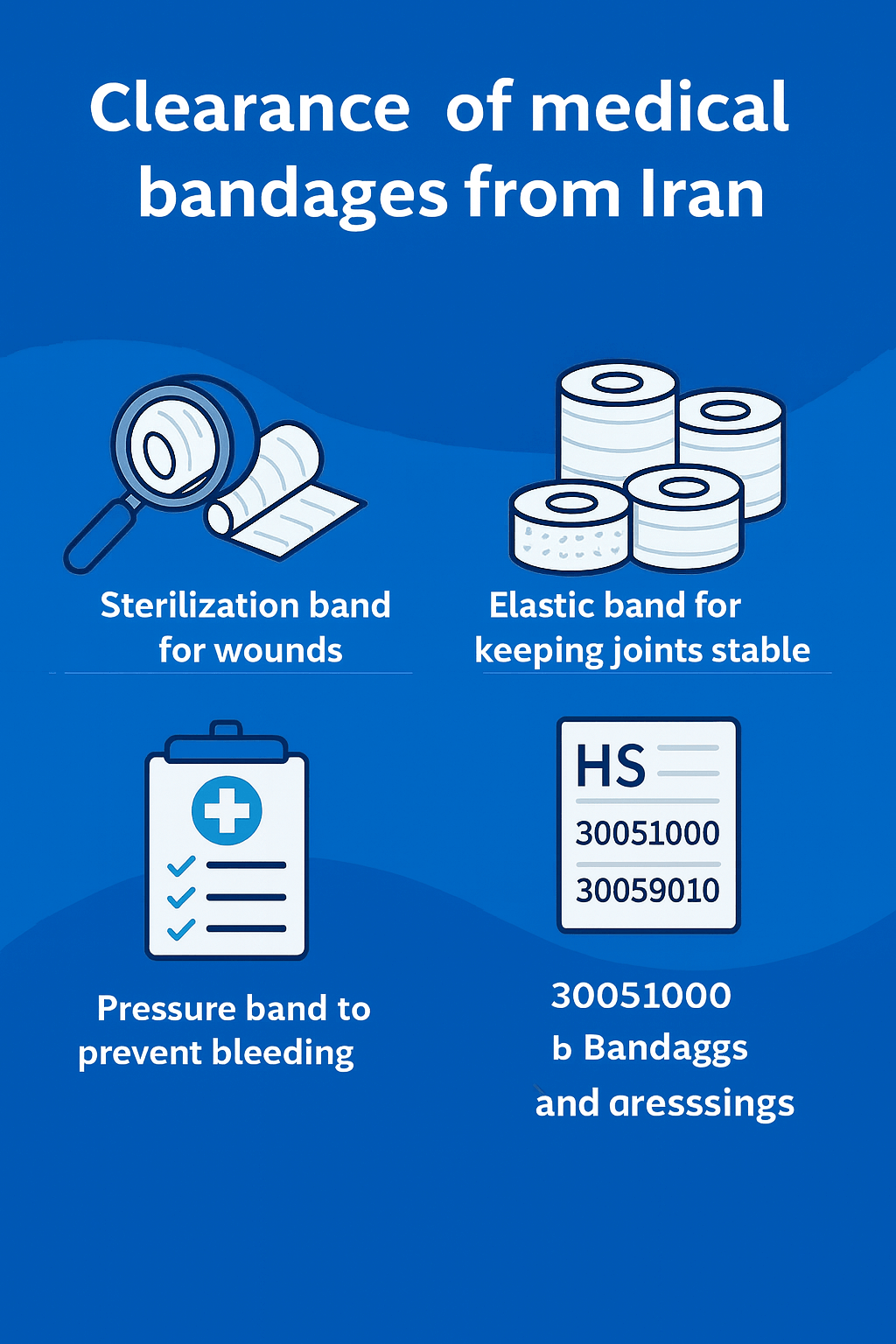
1) Detailed Description of Medical Bandages
2) Types of Medical Bandages and Their Uses
First, it should be noted that medical bandages are produced and marketed in various types, each designed for specific applications. The main categories of medical bandages include the following:
Simple Bandages (Sterile Gauze)
These bandages are made of cotton or fabric materials that can absorb bodily fluids and secretions. They are used to protect wounds and prevent environmental contamination and are usually produced and packaged in sterile form.
Elastic (Stretch) Bandages
These bandages are used to support muscles and joints, immobilize injured limbs, and reduce inflammation. In cases such as muscle strain, joint sprain, and even for protecting post-operative areas, elastic bandages play an effective role.
Compression Bandages
This type of bandage is intended to apply pressure on specific areas of the body to prevent bleeding, control swelling, and accelerate blood flow. Compression bandages are particularly used in post-operative care and in managing varicose veins.
Adhesive Bandages & Advanced Dressings
These bandages are designed to secure wounds and dressings and, due to strong and water-resistant adhesives, can be used for extended periods. They are especially suitable for superficial wounds or areas requiring frequent dressing changes.
Burn-Specific Bandages
Bandages made from materials suitable for burn treatment. With antiseptic and cooling properties, these bandages help accelerate burn healing and prevent infection.
3) Key Steps & Considerations in Clearing Medical Bandages
1. Obtaining Health & Medical Permits
The first and most fundamental step in the clearance process of medical bandages is obtaining the necessary permits from the Ministry of Health, Treatment, and Medical Education. These permits indicate the approval of the health and safety of imported products and ensure that imported medical bandages comply with national health standards. This step requires submitting complete documents to proceed with importation.
2. Customs Tariff (HS Code)
Medical bandages have different customs tariffs based on their type and construction. Accurately determining the tariff code for each type of medical bandage is crucial and significantly affects the clearance process. For example:
- Simple bandages and sterile gauze: cleared under HS Code 30051000.
- Adhesive and elastic bandages: cleared under HS Code 30059010.
Using the correct tariff code is vital to avoid potential issues such as increased costs and clearance delays.
3. Quality Standards & Certifications
For customs clearance of medical bandages, presenting valid international certificates such as CE (European marking) and FDA (U.S. Food & Drug Administration) is essential. These certifications show that imported products have undergone quality testing and comply with global standards.
4. Submission of Commercial & Financial Documents
Commercial documents such as the Invoice, Packing List, and purchase contract must be completely submitted to customs. These documents are necessary not only for calculating taxes and duties but also to demonstrate the legality of importation and transaction transparency.
5. Quality Control & Final Inspection
Before medical bandages enter the market, they are examined and tested by oversight bodies such as the National Standards Organization and the General Directorate of Medical Equipment. This step ensures the health and safety of imported products, and if any defect or quality issue arises, clearance may be postponed.
Need precise HS Code determination, Ministry of Health permits, and document preparation? Our team manages your case end-to-end.
Request a Pro Forma Invoice4) Customs Tariff / HS Code
| Goods | Short Description | HS Code |
|---|---|---|
| Simple bandage / sterile gauze | Absorbs exudate and protects the wound | 30051000 |
| Adhesive / elastic bandage | Fixation/support of muscles and joints | 30059010 |
Exact classification depends on material, sterility, elasticity, roll/pad dimensions, and end use.
5) Special Conditions for Import & Export of Medical Bandages
Countries Exporting Medical Bandages to Iran
- China:
- China, as the world’s largest producer and exporter of medical bandages, supplies a major share of Iran’s imports. Chinese products are offered in Iran at reasonable prices and with high variety, and due to the country’s strong production capacity, supplying large quantities is easily possible.
- Germany:
- Germany is a notable exporter of medical bandages to Iran thanks to high-quality medical equipment and strict standards. German bandages usually cost more than Chinese products due to adherence to international and health standards, but they are superior in terms of quality and safety.
- Turkey:
- Turkey is one of Iran’s main suppliers of medical bandages. Geographic proximity, lower transportation costs, and acceptable product quality have made Turkey a key trading partner of Iran in medical equipment.
- India:
- India is also known as a supplier of medical bandages at competitive prices. Due to low prices and a variety of packaging and bandage types, Indian products are in high demand in Iran.
6) Iranian Market
- Due to high demand in hospitals, clinics, and home use, imports of these products account for a significant share of Iran’s medical supplies market.
- Mandatory permits from the Ministry of Health, CE/FDA, and quality control by oversight bodies are key market features.
- Choosing the correct HS and accurately completing documents determine clearance speed.
7) Iran’s Import/Export Volume + Global Turnover
8) Global Market: Major Exporters & Importers
China is recognized as the largest exporter of medical bandages in the world. After China, Germany, the United States, Japan, and South Korea also account for significant shares of exports.
Among importers, the United States, the European Union, Japan, and the Gulf countries are considered the largest consumer markets. 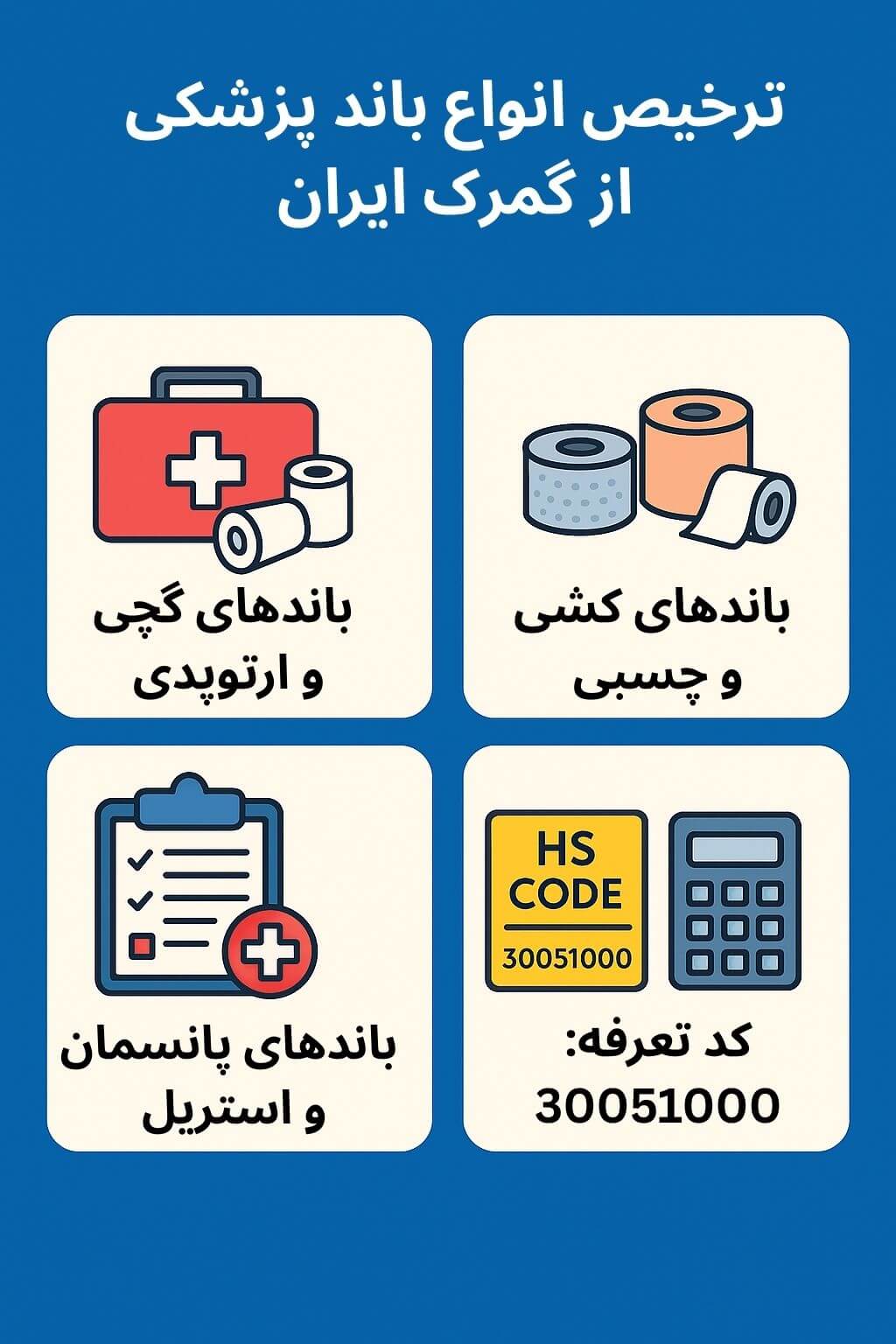
9) Required Documents for Clearing Medical Bandages
- To clear medical bandages from customs, a set of documents must be fully prepared and submitted. These documents demonstrate compliance with all trade, health, and required standards for importing medical equipment into the country.
1. Ministry of Health Permit
Since medical bandages are categorized as sensitive goods related to public health, obtaining a permit from the Ministry of Health, Treatment, and Medical Education is the first and most essential step. This permit ensures that imported products comply with Iran’s health and safety standards and are approved.
2. Standard Certificates (CE and FDA)
Importers of medical bandages must provide CE (European Conformity) and FDA (U.S. Food & Drug Administration) certificates for their products. These certificates indicate compliance with global quality and safety standards in production and are necessary for customs clearance.
3. Commercial Invoice
The commercial invoice is a primary document that states information such as the value of goods, quantity, type, and other commercial specifications. It is required for the assessment of customs costs and the calculation of import taxes and duties.
4. Packing List
The packing list provides complete information on package contents, quantities, and packing methods. This helps customs correctly identify the number and type of goods and expedite clearance procedures.
5. Bill of Lading
The bill of lading is issued by the carrier and includes information about origin, destination, and type of goods. It is essential for tracking shipment status and clearing it from customs.
6. Certificate of Origin
The certificate of origin is issued by the exporter country’s chamber of commerce and shows in which country the goods were produced. This document plays a key role in determining customs tariffs.
7. Order Registration License
This license is issued by the Ministry of Industry, Mine, and Trade and indicates that your intended goods are authorized for import. Without it, importing medical bandages is not possible.
8. Health Certificate
Some medical bandages may require a health certificate from the country of origin. This certificate confirms that the goods were produced in accordance with health and safety standards.
9. Customs Declaration
The customs declaration is a document that the importer must submit to customs, providing full information about the goods, tariff code, value, and other commercial details. Proper completion of this declaration is very important to ensure correct processing of clearance steps.
10. Certificate of Conformity
If imported medical bandages need to comply with specific Iranian standards, this certificate must be issued by the National Standards Organization. It confirms that the goods meet domestic standards.
11. Medical Import License
For importing medical bandages, obtaining a Medical Import License from the Food and Drug Organization is mandatory. This license indicates the legality of importing medical equipment.
12. Foreign Exchange Approval
Due to foreign exchange restrictions and rate fluctuations, importers must obtain FX approval from the Central Bank. This approval ensures that foreign currency resources for importing goods have been properly secured.
13. Proof of Payment of Customs Duties & Taxes
After customs assessment of the goods, the importer must pay taxes and customs duties. Providing proof of these payments is required for final clearance.
Key Tips & Practical Recommendations
- Include a technical datasheet and a packaging sample for each item to enable correct classification.
- Align production/import capacity with the commercial value stated on the invoice to avoid supplementary valuation.
- Pre-validate CE/FDA with the seller and verify the registration number.
Frequently Asked Questions
What is the HS Code for medical bandages?
For sterile gauze, typically 30051000, and for adhesive/elastic bandages, commonly 30059010 are used; the final determination depends on technical specs and packaging.
Which permits are required for clearance?
Permits from the Ministry of Health/Food and Drug Organization, CE certificates and, if needed, FDA, order registration, and complete commercial documents.
What are the main import sources and the global market outlook?
China, Germany, Turkey, and India are key exporters to Iran; globally, China leads exports while the U.S./EU are among the largest importers.
Premium Customs Clearance Services by Saba Brokerage
As one of the leading and experienced brokers in clearing medical goods, Saba Brokerage offers specialized, professional services to importers. By using our services, you can benefit from a fast, hassle-free clearance process for medical goods including bandages. These services include:
- Expert advice on tariff code selection: our specialist team, with experience and awareness of the latest tariff changes, selects the best customs tariff for your goods to prevent extra costs.
- Preparation and completion of documents: in close cooperation with the Ministry of Health and oversight bodies, we obtain all necessary permits in the shortest possible time and fully prepare commercial and financial documents.
- Expediting clearance: through experience and professional relationships, the clearance process for medical bandages is significantly accelerated so you can receive your goods without concerns about timing.
- Following up on customs issues: in case of any problem or delay at customs, our team provides continuous follow-up and appropriate solutions to quickly resolve your customs issues.
