.png)
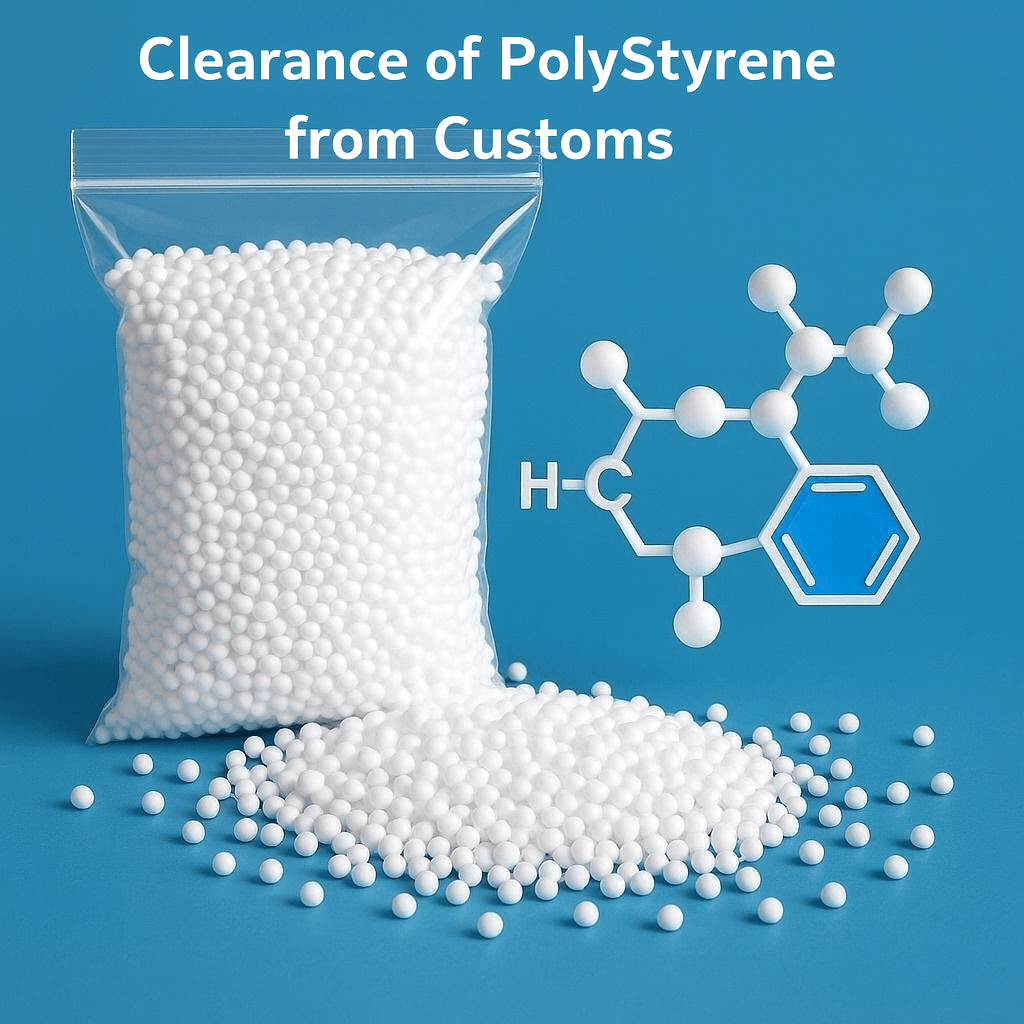
Polystyrene is one of the most widely used synthetic polymers across various industries, playing a vital role in the production of packaging, construction, and industrial products. Owing to properties such as lightness, thermal resistance, flexibility, and insulation, it is extensively used in automotive, home appliances, and electronics. Therefore, customs clearance of polystyrene requires precise knowledge of tariff codes, standards, and document verification.
To estimate the time and cost of polystyrene customs clearance (GPPS / HIPS / EPS and special grades), contact the experts at Saba Tarkhis.
Immediate & Free Consultation1) Types of Polystyrene, HS Code, and Applications
Depending on the type and grade, polystyrene has different customs tariff codes. Below are the most important types with HS Codes and applications:
1. General-Purpose Polystyrene (GPPS) — HS: 39031100
Features: Transparent, relatively brittle and rigid; easy to mold; suitable for lightweight and disposable products.
Disposable containers and packaging • Acoustic/thermal insulation • Lightweight electronic parts • Model making and decorative items
2. High-Impact Polystyrene (HIPS) — HS: 39031200
Features: Higher impact resistance and flexibility than GPPS; suitable for durable parts.
Appliance housings (refrigerator/washer) • Automotive interior parts • TV and electronics enclosures • Durable toys
3. Expanded Polystyrene (EPS) — HS: 39031900
Features: Expandable into an ultra-light foam with excellent thermal/acoustic insulation; widely used in packaging and construction.
Building insulation • Packaging of sensitive products • Lightweight panels • Product protection in transportation
4. Special/Reinforced Grades — HS: 39039000
Features: Enhanced for specific resistances (chemical/thermal) tailored to specialized industrial applications.
Industrial products requiring high resistance • Chemically resistant coatings • Certain medical equipment
| Polystyrene Type | Short Description | HS Code |
|---|---|---|
| General-Purpose Polystyrene (GPPS) | Transparent, moldable, for light/disposable uses | 39031100 |
| High-Impact Polystyrene (HIPS) | More impact-resistant and flexible than GPPS | 39031200 |
| Expanded Polystyrene (EPS) | Foamed, lightweight, thermal/acoustic insulation | 39031900 |
| Special reinforced grades | Improved chemical/thermal resistance | 39039000 |
Exact classification depends on form of supply, grade, packaging, and end use.
2) Key Points for Clearing Polystyrene from Customs
Document consistency: Prepare the invoice, packing list, and certificate of origin accurately and in compliance with Iranian regulations.
Standards and hygiene: For food-related applications, providing health and compliance certificates is mandatory.
Quality and weight assessment: QC, weight, and volume control are essential to avoid discrepancies.
Taxes and duties: Correct calculation based on the HS Code is crucial to avoid delays/penalties.
Need precise HS Code determination, permits, and document preparation? Our team manages the process end-to-end.
Submit Pro Forma Request3) Import and Export Conditions for Polystyrene
Importing polystyrene into Iran
Iran imports a large portion of its polystyrene needs from China, South Korea, Taiwan, Turkey, and Germany; geographic proximity and supply quality/stability are the main selection factors.
Exporting polystyrene from Iran
With domestic petrochemical capacity, exports to Iraq, Afghanistan, and the UAE are carried out and show a growing trend.
4) Import/Export Volumes and the Global Market
Estimated Iranian imports: about 50–70 thousand tons/year. Exports: about 10–20 thousand tons/year.
Global market: Global production ~14 million tons (2023). Major producers: China, USA, Germany, South Korea, and Japan; major importers: India, Brazil, Mexico, and Turkey.
5) The Best and Simplest Method for Polystyrene Clearance
Using an experienced customs broker is recommended:
Place the order in the Integrated Trade System • Provide shipping documents (invoice, packing list, bill of lading) • Calculate and pay duties and taxes • Inspection and reconciliation of documents with the shipment.
6) Required Documents
To clear goods such as Polystyrene from customs, providing a set of official and accurate documents is mandatory. Each document plays a key role in verifying authenticity, value, and import conditions of the goods. Below are the most important required documents with additional explanations:
-
Commercial Invoice:
Includes full product information, quantity, unit and total price, country of origin, payment terms, and buyer/seller name and address. This document is the basis for customs valuation and calculation of import duties and taxes. -
Packing List:
Indicates packing method, number of packages, type, net and gross weight, dimensions, and numbering of each package. This document is important for reconciling goods with the declaration and during physical inspection at customs. -
Certificate of Origin:
Issued by the chamber of commerce of the exporting country and specifies the country of origin of the goods. Providing this certificate is necessary to benefit from preferential tariffs or specific exemptions under international agreements. -
Bill of Lading / Air Waybill:
A document containing transport information — including carrier name, type of vehicle, container number, route, and shipment specifications. This document indicates ownership of the goods during transit. -
Order Registration in the Integrated Trade System:
All importers must, before shipment, register their order in the Iran Integrated Trade System and obtain the import permit from the Ministry of Industry, Mine, and Trade. This step is the legal basis for initiating the import process. -
Inspection Certificate:
Where pre-shipment inspection is mandatory, this certificate is issued by accredited inspection companies to ensure quality, quantity, and conformity of the goods with the invoice. -
Health & Standard Certificates:
For polystyrene used in food, pharmaceutical, or specific products, obtaining permits from the Iran National Standards Organization and the Food and Drug Organization or Department of Environment is mandatory. -
Customs Declaration:
The principal clearance document containing product details, value, weight, tariff code (HS Code), country of origin, currency type, and clearance route. This document is registered by the broker in the customs EPL system. -
Customs Tariff Code (HS Code):
Polystyrenes are classified under different headings according to their type:-
GPPS (General Purpose Polystyrene): 390311
-
HIPS (High-Impact Polystyrene): 390312
-
EPS (Expanded Polystyrene): 390319
Correct HS Code selection plays a critical role in determining the payable duties and taxes.
-
-
Business Card (Trade License):
The official import/export permit for individuals or companies issued by the Chamber of Commerce, indicating legal eligibility to conduct commercial operations. -
Receipt for Payment of Customs Duties and Taxes:
After final assessment and issuance of the payment slip, the importer must pay import duties, taxes, and other legal fees and provide the relevant receipt to customs.
Frequently Asked Questions
What are the HS Codes for polystyrene types?
GPPS 39031100, HIPS 39031200, EPS 39031900, and special grades 39039000; final determination depends on technical specs/grade/application.
Which documents are required for polystyrene clearance?
Invoice, packing list, certificate of origin, bill of lading, order registration, inspection certificate (as applicable), health/standard permits, customs declaration, trade license, and duty/tax payment receipt.
What are the common origins for polystyrene imports to Iran?
China, South Korea, Taiwan, Turkey, and Germany are common suppliers to the Iranian market.
Special Polystyrene Clearance Services by Saba Brokerage
Saba Tarkhis Brokerage, with a team of specialists experienced in customs affairs, has for years been one of the most active clearance companies in importing polystyrene. With full command of customs laws, regulations, and circulars, the team carries out all clearance stages with precision, speed, and transparency so importers can receive their goods without concern.
Saba Tarkhis’s specialized services in polystyrene clearance:
-
Specialized customs consulting:
Before any action, Saba’s experts assess the type of polystyrene (expanded, high impact, or general purpose) and the country of origin, guiding you on required documents, customs tariffs (HS Code), and permits from the Standards Organization and Department of Environment to prevent potential errors. -
Fast and accurate follow-up:
Saba’s team follows all steps, from order registration in the Integrated Trade System to delivery at the destination warehouse, using electronic systems and direct coordination with customs. Our aim is to reduce clearance time and avoid unnecessary stoppages at customs. -
Reducing customs costs:
Our experts help you significantly cut import costs—without any deviation from regulations through precise tariff review, leveraging legal exemptions and customs facilities, and choosing the appropriate clearance route. -
Compliance with international standards:
All processes comply with international goods inspection standards and quality requirements so that imported polystyrene is fully approved in terms of composition, safety, and quality by the Standards Organization and the end consumer.
